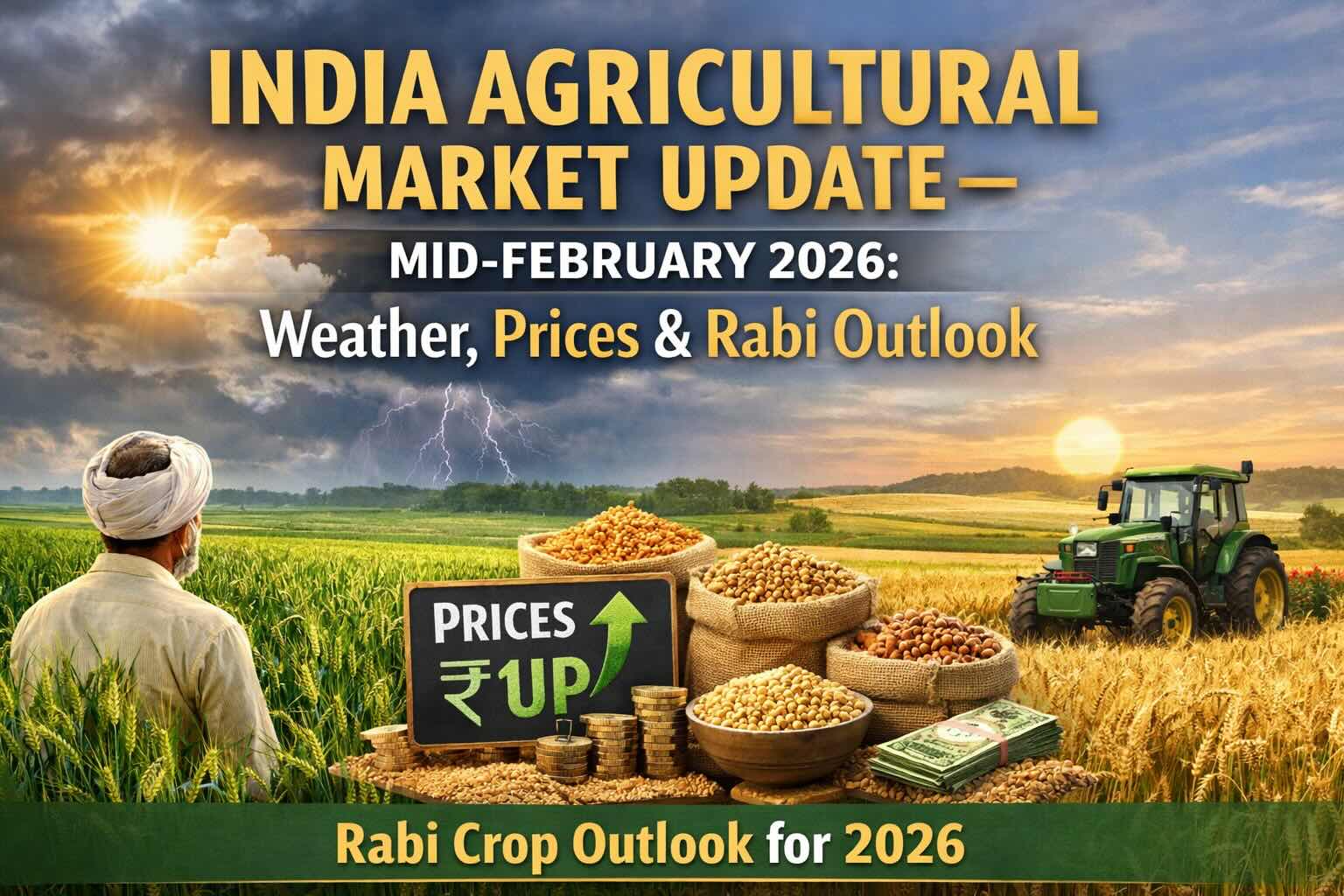
India Agricultural Market Update – Mid-February 2026: Weather, Prices & Rabi Outlook
As we move through mid-February 2026, India's agricultural market is experiencing a mixed but mostly stable phase. The rabi season (winter crops) is well underway, while early kharif preparations are beginning in southern states. Weather has been largely favorable so far, but there are emerging concerns that could influence late rabi harvests and early kharif sowing.
Current Weather Patterns
Rabi Season (ongoing): Most northern and central states (Punjab, Haryana, UP, MP, Rajasthan) have received adequate winter rains from western disturbances in December–January. This has maintained good soil moisture and supported wheat, mustard, gram, and potato crops.
Temperature: Mild to moderate (10–25°C in key rabi belts) — ideal for wheat grain filling and potato tuber development. No major cold waves or frost events reported in major wheat belts yet.
Emerging Concern: February has seen drier-than-normal conditions in parts of northwest India and central India. If this persists into March, wheat yields could face moisture stress in rainfed areas.
Commodity Price Trends (Mid-February 2026)
- Wheat: Stable to slightly firm at ₹2,400–2,650/qtl in major mandis (Punjab, UP, Haryana). Record production in 2025 and good rabi prospects are keeping prices in check, but any dry spell could push them up.
- Rice: Steady at ₹2,800–3,400/qtl (depending on variety). Carryover stocks are high, limiting upside.
- Pulses (Gram/Chana): ₹5,000–6,200/qtl – firm due to strong domestic demand and limited imports.
- Oilseeds (Mustard, Soybean): Mustard ₹5,200–5,800/qtl – supported by good rabi sowing; soybean ₹4,200–4,600/qtl – stable.
- Vegetables (Potato, Onion, Tomato): Potato ₹1,800–2,400/qtl (seasonal decline); onion ₹2,500–3,500/qtl (volatile); tomato ₹2,000–3,800/qtl (supply pressure).
Overall, food inflation remains under control, but dry February weather is being closely watched.
Short-Term Outlook (Next 30–60 Days)
Positive: Good reservoir levels and mild weather support rabi maturity.
Risks: Prolonged dry spell in March could reduce wheat and pulse yields in rainfed zones.
Market Sentiment: Traders are cautiously optimistic, with many holding stocks expecting stable-to-higher prices if weather turns adverse.
At Mandibhav.in, we track daily mandi prices, AI-powered "Sell vs Hold" signals, disease risk alerts, and route optimization to help you make profitable decisions in this dynamic market.